LOUISE
BRYANT
An Informal Biography of an
Activist
By William M. Greene
TO MY SISTER ANNE for dedicating the active years of her life to
helping retarded children.
A FEW INTRODUCTORY NOTES
Even though Louise Bryant lived a
unique, almost stranger-than-fiction life, little has been known about her and
her participation in historically-significant events.
Indeed, the only information
available about her has come from books about men and women with whom she was
involved, notably the biographies of John Reed and Eu
STRANGE INTERLUDE.
Her name may also be familiar to
those in the rapidly shrinking ranks of men and women old enough to recall her
activities during the post-World War One hysteria that gripped the nation, and
her participation in the riots and hunger strikes in jail that marked the
women's struggle for political equality.
Her own two books detailing her experiences in
But all this covers a short span of
her life – five years. It says very
little about her family, her childhood and the elements that set the pattern
for her goal in life.
This book then is the story of
Louise Bryant from the day she was born in San Francisco to her death in Paris
- the thirty years of her life before she met John Reed in Portland, Oregon;
her involvement with him and Eu
Despite destruction of all important
legal documents in the earthquake and fires of San Francisco, where Louise was
born, and other records in a school fire in Nevada, where her scholastic years
began, it was, nevertheless, possible to locate and document essential
information about her parents, grandparents and members of her immediate
family, with the help of old federal census records (before these became
unavailable to the
Dramatization of her life on the
West Coast before she met Reed is based on interviews (often on tape) and
correspondence with men and women in their late seventies, eighties and even
nineties, with recollections that go back to her grade school and college
years. Some were classmates, sorority
sisters and neighbors during the eighteen-nineties and the first decade and a
half of this century.
There were even some with memories
of their days as students in
AVAILABLE
ILLUSTRATION MATERIAL
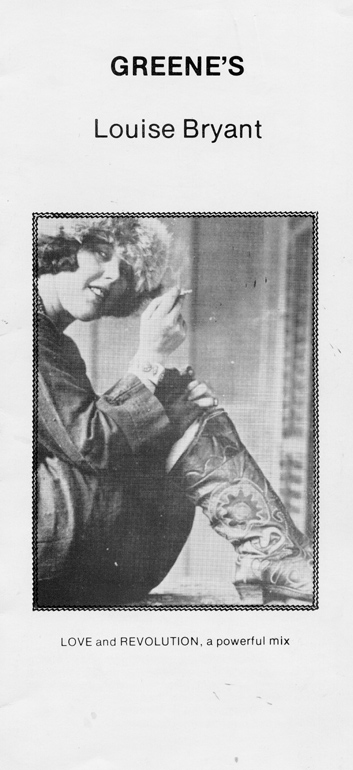
LOUISE
Age three and a half with large doll, a gift from her father.
In Cossack costume.
At Reed's funeral in
Shortly before her death, showing devastating effects of drinking
and drugs.
HUSBANDS
Paul A. Trullinger
John S. Reed
William C. Bullitt
OTHER
Eu
Alexander Kerensky.
Louise Bryant and Agnes Boulton revealing remarkable resemblance.
CONTENTS
PART ONE
Birth of a Rebel
‘Boomtown’
A Taste of Violence
Alienation
Campus Days
It's a Man's World
Mrs. Trullinger
John Silas Reed
The Way to a Man's Heart
PART TWO
Marriage! Who Needs It?
War Clouds
The
‘Strange Interlude'
Wheel of Pain
The Course of True Love
PART THREE
Utopia Must Wait
Ingredients for a Revolution
Prelude to Upheaval
LENIN: 'Radishes Are Red Only Outside'
Reporter at Large
The Lighter Side
Dosvida’nya
PART FOUR
Gene Doesn't Live. Here Anymore
Home of the Brave
Whatever Happened to
WOMEN'S LIB: The Tough Years
The Lecture Trail
Communism
Death of an American Radical
PART FIVE
Top Secret
Life with Bullitt
Disintegration
‘To Me Peace Means Death'
Epilogue
Acknowledgments
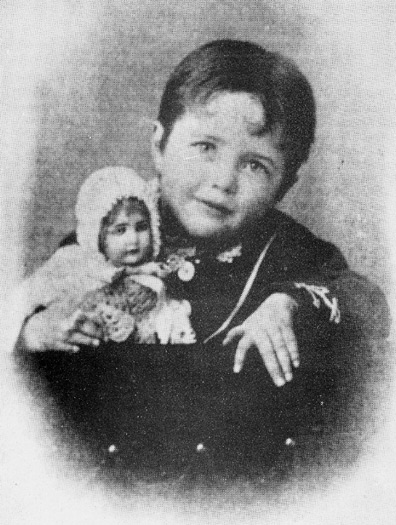
Here is Anna Louise Mohan, age three and one half with
Gretchen, a gift from her father, Hugh, a
BIRTH
OF A REBEL
Before the
Among the
In one of these - a two-story brick
house with six cement steps that began abruptly at the sidewalk and ended at a
large varnished door bearing the number 2943 - Barbara Louisa Mohan was giving
birth to her third child in an upstairs bedroom. She was twenty-eight, blue-eyed and blonde,
with Teutonic features. Barbara Louisa
was having a harder time bringing this child, into the world than her other two
- Lou Parnell, age three and Barbara, a year younger. Two women were there to help; her younger
sister, Marynell, and Mrs. Louise Emmerich, a midwife, whose home was a few
blocks to the north on Howard.
In the kitchen, on the floor below,
was the father - a
All had hoped that the new baby
would be a boy so that Barbara would have a brother slightly older and another
younger. The children themselves, of course, were too young to care one way or
the other. They were hungry and wanted
their supper. When Mrs. Emmerich appeared at the head of the stairs and
announced that they had a baby sister, they looked pleased. It meant supper would soon appear on the
large, square, oilcloth-covered kitchen table.
As for the father! If Hugh
Jonathan Mohan was disappointed, he certainly did not show it. He walked to the cupboard for a bottle and
two glasses, and after he and Uncle Philip toasted the new baby's arrival, both
went upstairs to see Mrs. Mohan.
The children saw their little
sister the next day, a squirming, squalling bundle swaddled in a long, flannel
gown from the sleeve end of which stuck out two tiny, clenched fists. Her face,
red from exertion, seemed all wide-open mouth, wrinkled skin and tightly shut
eyes. Not until Marynell shifted her so
that she could latch onto one of Barbara Louisa's breasts did her sobs and
wailing stop. The children watched their
sister, their faces mirroring both curiosity and disgust.
It was Saturday, December 15,
1885. A year later she was baptized and
formally became an Episcopalian. By that
time it was clear she would resemble her tall, handsome Irish father more than
her Teutonic-featured mother, as did the other two children. They named her
Anna Louise.
Anna Louise was nearing her fifth
birthday in 1890, when two of her father's friends brought him home one
afternoon and the children saw their mother help them carry their father into
his bedroom. They ever saw him alive
again. He died in five days, a victim of
pneumonia. She recalled little of her
father while he was alive, only that he sometimes came home and hardly talked
to anyone, and at other times he was tender and brought home gifts. One of the most exciting of these occasions
was when he brought home beautiful dolls, one for her and another for Barbara,
and everyone marveled because they said her doll looked just like her. There was a rocking horse for Lou Parnell
too. On these occasions there was always
a faint, pleasant smell on his breath when he kissed her and the other children
as he handed them their gifts.
She also recalled times when their
home was full of strangers. They would sit and drink, mostly beer, with their
father, while she, Barbara and Lou Parnell played in the other room. Even when they got tired at night and went to
sleep, she would sometimes awaken and hear their voices, with her father's the
loudest of all. She would hear words not
even Lou Parnell, who was three years older, could understand. But the words seemed very important to her
father and his friends. Once or twice
she asked her mother to tell her what they were talking about. Her mother tried to explain, but she was not
very successful, usually telling her to wait until she and Barbara and Lou
Parnell were a little older. Her mother proved to be right. It was not long
before Anna Louise began hearing the same words again and they began to take
meaning, forming a pattern and shaping her life.
When she was seventeen
her mother told her the truth about her father - Hugh Mohan was a heavy
drinker, and it was a severe cold after a long drinking spree in
"Blind" Chris Buckley's saloon, which turned into pneumonia, and
killed him when he was only forty years old.
But a good many things had happened
before her mother got around to talking about Hugh Mohan. By that time, they
were living in
By that time, however, Louise had
learned so much about her father and her four grandparents, and she had
surrounded their lives with such a romantic aura, it wouldn't have mattered to
her if her father had died on the gallows for involvement in heinous mass murder. (Louise herself did not begin drinking
until 1926 when she was married to Bullitt. Until that time she rarely smelled
liquor on a man's breath without associating it with her father's tenderness.)
First in her dream world peopled by
wonderful men and women was - of course - her father; but as her mother, bit by
bit, unfolded the story of her grandparents, they too quickly joined the
ranks" of all who deserved beatification for having lived and died as
heroes.
It was not difficult for her to
romanticize her four grandparents - alt were European refugees from hunger,
tyranny and political turmoil during the middle of the nineteenth century.
On her mother's side were Christian
Louis Flick and his wife Barbara. They were newlyweds in Germany (he was born in
Hesse, she in Baden) when they joined other political activists fleeing Europe
turmoil created by an odd combination of a middle class and oppressed workers,
inspired by Marx-Engels theories, rebelling against monarchial arrogance and
corruption. In
The Flicks had three children:
Uncle Philip, born in 1853; Barbara Louisa, Louise's mother, in 1857; and
Marynell in 1859. When gold began to give out around Marysville, the Flicks
joined hundreds of others heading for Virginia City in
Here in 1880, Barbara Louisa,
twenty-three, tightly-corseted and irresistibly pretty in her "bolero
jacket and small hat perched precariously on top her blonde hair, heard Hugh
Jonathan Mohan address a Democratic Party picnic. Even before he came to their table to say
hello, while circulating among the crowd, Barbara Louisa was hopelessly in love
with him. Mohan was seven years older
than she was. They were married after a
brief courtship.
The Mohans, Louise's other
grandparents, were able to provide her active imagination with fuel that was
even more inflammatory. For while the Flicks, upon arrival in
Hugh himself was born in
Hugh was a few months past his
sixteenth birthday when he joined the large gangs of young Irishmen hired to
lay the tracks for the Union Pacific, building
When the great celebration in Utah
ended, the bands stopped playing and the governors and other politicians ended
their speeches proclaiming the start of a new era for railroading along with
growth of America that would never end (For the railroads the end came in
1969, exactly one hundred years later, when a
Hugh began by working in a fish-cleaning
plant in
With the election of Grover Cleveland as
Democratic President in 1884, Hugh Mohan hit affluence. The political
"spoils system" was in full bloom and every Democrat, down to those
who tacked up election placards on telephone poles, was assured a job.
"Blind Boss" Buckley rewarded Hugh Mohan with a government post that
bore an elaborate title, with which went a comfortable salary.
Mohan now began to appear in the San
Francisco City Directory as a "Statistician of the San Francisco Division
of the United States Department of Labor," a most appropriate appointment
for a dedicated Democrat, the U.S. Department of Labor in those days being
responsible for the naturalization of aliens before they became eligible to
vote.
With the appointment and a secure income,
Hugh Mohan moved his family from the rickety old house on
Louise's father was, by that time, not
only a fiery orator able to arouse San Francisco Irish, German and other
poorly-paid workers to the Democratic cause at election time, he had also
become a leader among those extreme radical Irish-Americans in
In the eighteen-eighties, Mohan and his
fellow Irish activists were still smarting from the disastrous end of the
attempt by Irish-American extremists to invade
Nothing apparently came of the
guerilla-saboteur proposal. But in the years to come, Louise would hear echoes
of the muffled voices of the father she worshipped and his friends as they
drank beer and argued; she would hear them as John Reed talked with radical
Irish friends in Greenwich Village; she would hear them as she was writing a
moving tribute for the old Masses published by Max Eastman, lauding the life of
Sir Roger Casement, the Irish patriot executed by the British as a traitor; and
she would hear them again as a journalist when Irish-American senators with
long memories, would scuttle Woodrow Wilson's hopes for United States
membership in the League of Nations. He
needed their support, but he also needed the support of
BOOMTOWN,
Louise spent her childhood - the most
critically formative years in the development of a child's personality - and
her adolescent years in
Here in Nevada, she got her elementary and
high school education, lived through the violence which greeted Eu
By the time she was thirteen, she was boasting about an imaginary
sexual rendezvous with a twenty-year old man in a boxcar on a side-track in the
railroad yards, but when she actually did have her first affair at fourteen and
a half, it fell far short of her romantic expectations.
From that affair, however, and those that
followed on the
When Hugh Mohan died in 1890, he left a
widow and three children, as well as a lot of unpaid bills. (Hugh’s affluent years ended when Grover
Cleveland moved out of the white House and Benjamin Harrison moved in, and
federal government jobs immediately went to deserving Republicans.) With nowhere else to turn, except her younger
sister, Marynell, who had by then become Mrs. Ernest Girvin, the wife of a
hard-pressed San Francisco court reporter, Mrs. Mohan decided to accept the
invitation of brother Philip to join him in Nevada until she got over the shock
of losing Hugh and could begin to make a new life for herself and the children.
In
In January of 1891, Mrs. Mohan and her two
young daughters, Louise, five, and Barbara, some eighteen months older, arrived
in
Eighteen months after Mrs. Mohan and the girls arrived in Reno
Barbara Louisa Mohan became the wife of Sheridan D. Bryant, to whom Uncle
Philip introduced her one spring afternoon in downtown
As for the mother, she faced his growing
interest in her with mixed feelings. He
was totally different from the handsome, passionate, intellectually and
physically stimulating Hugh Mohan, who had encouraged her to continue her
cultural interests - music, writing, good books - interests which had started
in rip-roaring
Now she was thirty-five, a widow with
three children, she knew nothing at all about earning a livelihood, and life on
the ranch was beginning to become difficult.
Aunt Mary was not very subtle about hints that her sister-in-law and two
young nieces were becoming a burden.
Sheridan Bryant, her courter, seemed kind, pleasant and
On June 11, in 1892, Sheridan Daniel
Bryant and Louise Barbara Mohan appeared at the Washoe County Courthouse, the
large grey building in the heart of downtown
"He looks like Santa Claus without
the red suit and white whiskers." she had told Barbara the first time he
turned up at the Flick ranch, and added: "I don't like his yellow
tooth. He's not like Papa and Uncle Philip."
They left for
It was not a long ride. Aboard the train
Louise and Barbara were wide-eyed and
excited. There was so much new and
strange to see and marvel at.
The town began to sink into dusty
obscurity after the Bryants had lived there ten years. That was when the railroad decided to move
its division point to
What still remains in Wadsworth is the
large two-story, brick school building, with its huge exterior, steel
cylindrical fire escape down which Louise and all the other children screamed
joyfully as they spiraled down the shiny slide during fire drills. The only
other reminder of early
Early railroad division points in the
Occasionally it was possible to build a
division point at a spot on the main line where a town or village was already
established, as in the case of
There never was a railroad town where the
main street wasn't called
The Bryants began life in one of these
houses near the west end of
The roundhouse was a large, brick,
half-circular structure, with only the outside half-circle walled in. Two dozen sets of rails began inside the
building and extended outside like the spokes of a wheel, ending at the end of
a huge, round, concrete pit. In the
exact center of the pit was a heavy steel column on top of which was a narrow
bridge with a pair of tracks. The column
with its bridge was so precisely balanced it could be easily turned and the
tracks lined up with any pair of those which led into the roundhouse. Louise never got tired watching a hostler
bring a huge locomotive onto the bridge tracks and slowly and carefully balance
it in the exact center so that the locomotive and bridge rocked gently, the way
a well-balanced teeter-totter does. Then
the whole business was easily pushed around until the tracks were lined up with
a vacant roundhouse stall. Then came two
toots by the hostler inside the cab and the huge mass of steel lumbered slowly
into the roundhouse.
The house across the street was another
matter. Each night it was brightly lit,
and men would go in, and sometimes they would be staggering when they came out. On warm evenings there would always be a
half-dozen ladies in beautiful clothes on the wide porch. At first, only a few days after they moved
in, when Louise asked her mother about the women, the men, and why the house
was always lit up at night, Mrs. Bryant was cross and told her it was nothing
she and Barbara were to talk about, and ordered them to keep away from the
front windows. But then the mother
recalled her own shock as a teenager when, not having been told, she learned
the truth about the women whose hair was made to look pretty by her own father
in his hairdressing emporium, and she decided there was no way to evade the
problem of satisfying their curiosity forever.
She began by telling them that when they grew older they would
understand much better, but in the meantime it was enough for them to know that
the women across the street were forced to do bad things with men they didn't
even like, because their parents were poor and they had no husbands to take
care of them, and that this was the only way they could get money to buy food
and other things that they needed.
Louise immediately demanded to know what
the bad things were, but Mrs. Bryant only told her again that they would
understand more when they were older, adding that she and Barbara should choose
their lives carefully, so that under no circumstances would they ever find
themselves having to do what the women across the street had to do in order to
live.
Louise thought of asking
She was learning that there were many ways one could become
popular.
Louise and Barbara began their formal
education in
While she was a bright student who made
good grades in subjects she was interested in, she became bored with school
routine almost as soon as the novelty of being in class with a lot of boys and
girls wore off, and she would wait impatiently for recess, when more important
subjects than school work could be discussed.
She enjoyed the excitement that came with the periodic fire drills, and
at home she suddenly began to find excuses for not plunging eagerly into
performing assigned chores the way Barbara did.
Mrs. Bryant chided her gently, seeing in her youngest daughter the early
signs of development of characteristics that had made Hugh Mohan the glamorous
husband she had loved so passionately.
She had an uneasy feeling about her pretty young daughter's future, but
not the slightest premonition of the despair and heartbreak that would be hers
and Sheridan's when her daughter's career became almost indistinguishable from
one that Hugh Mohan might have followed was he alive.
During the first half of her second term,
Louise began the practice of trying to banish boredom by losing herself in
daydreams during class hours - drifting off into reveries where life was
exciting and romantic, where difficulties mellowed and problems became easy to
overcome, no matter what they were. It
was the
Philip Crosby of
"She was very smart," said
"That was her popular swear
word," said
Around the first of December in 1893, Mrs.
Bryant informed Sheridan that she was pregnant with his first child, and the
following week, Sheridan came home with a handbill announcing a meeting of the
Wadsworth lodge of the American Railway Union to be addressed by Eu
A
TASTE OF VIOLENCE
Every folding chair in the big hall was
filled by railroad men, their wives and children when the two men appeared on
the waist high platform that ran the full width of the rear wall. Their
appearance set off a long ovation with everyone stomping their feet, applauding
and yelling, "Hooray, Gene; Hooray, Gene." With Eu
Louise leaned over and whispered to
Barbara: "He's got a shoelace
around his neck."
"That's a necktie, silly," said
Barbara.
At that time Debs was not yet the fiery
speaker he became when he was nominated five times by the socialists as their
candidate for President of the
When Debs got through talking something
unusual happened -something Louise would recall for Debs years later when she
and John Reed visited him in prison. All
the chairs were folded and disappeared, as if by magic, and a long table
appeared by the wall loaded with cookies, lemonade and coffee. Everyone collected in groups to talk about
Debs' speech, and Debs himself, as he nearly always did at meetings of this
sort, began to stop at one group and then another to chat, and once in a while
to pat a child on the head.
When he came to the Bryants, he talked to
Sheridan and Mrs. Bryant and then turned to Barbara and asked what she wanted
to be when she grew up. Barbara was so
surprised she was tongue-tied for a moment.
Then she pointed to
Debs smiled and said: "I'm afraid
dear, you are going to have to think of something else. The railroad company seems to think that
women should stay at home and keep house."
Louise was bubbling inside. Her mind was racing. She knew that she would be next and was ready
when the time came, the words came tumbling over each other: "I'm going to
be a great writer and get all my friends to kill British soldiers, and I'll buy
new clothes for the Indian children, and I'll give some money to the ladies in
the house across from us so they don't have to do bad things with men just
because they don't have any money, and. . . and. . . ."
The men in their group and some others
nearby began to laugh when she mentioned the bad things the ladies had to do,
but Eu
Louise felt her face get hot, but she also
felt a pleasant glow. So many people were looking at her. She had never felt
quite so important. As they were all walking home through the falling snow,
while Barbara kept asking why he wore such rumpled old clothes that were too
big for him, Louise wanted to know what he was talking about. (The report of Deb’s appearance at
Louise's feelings of importance grew the
next day at school. Philip Crosby wasn't at the meeting, but he heard all about
it; nearly everybody at school knew that Mr. Debs had kissed her. This was a
new Louise Bryant whom all now envied. She did not have to do or say anything
startling to draw attention to herself.
At home, the moment they all returned from
the meeting, Louise began pressing her mother for information about Mr. Debs,
starting with why did her mother fall asleep while he was talking. Mrs. Bryant
said she hadn't fallen asleep, only closed her eyes because Mr. Debs was
talking about the same things her father had talked about the first time she
saw him in San Francisco. He was using almost the same words, exploitation,
tyranny. . . .it was then that Louise began to hear echoes of the strange
sounding words she had heard while her father and his friends were talking
heatedly when she and Barbara were small children. Her father, said Mrs. Bryant, wanted people
to vote for Mr. Cleveland for president because Mr. Cleveland was a Democrat
and would help workers get more money from their bosses. He also wanted, said her mother,
It was all interesting and confusing, for
Louise was only eight years old. And
before she reached her ninth birthday, not even her mother would be able to
convince her that strikebreakers and railroad bosses, to whom she soon began to
refer to as "them sonafabitches" were not bad people.
In June of 1894, six months after Debs'
appearance in
It was the great and violent railroad
tie-up of 1894, involving Debs' newly created American Railway Union and every
community whose existence depended on shipments of supplies the struck roads
had been providing.
The greatest impact of the upheaval was on
railroad towns like
They were sad, dreadful days for
eight-year-old Louise, even though the conflict lasted only a short time and all
rail transportation everywhere was back to normal by July 15. Worst of all was her loneliness and feeling
of rejection by her mother. Mrs. Bryant was so preoccupied with the baby and so
many other problems the strike had created, she had little time to talk to her
about what was happening and why.
She heard the old words again,
"exploitation," "tyranny," and some new ones,
"boycott," "injunctions," and Jimmy Kolchak's furious
blasphemous attack on the railroad owners and "scabs" and soldiers,
all of whom were "sonafabitches."
Jimmy, whom everybody called "the Polack," was the boy Louise
Bryant would have her first sex affair with some years later, but now he wasn't
even ten, and he offered her his explanation of what was going on.
"Them sonafabitches bosses want to
cut my papa's pay again," said Jimmy.
Louise was skeptical. She hadn't
heard Sheridan or anybody else say that.
"Well," said Jimmy, spitting viciously on the ground,
"them sonafabitches don't like my papa because we're Polacks."
Eu
A half dozen unsuccessful railroad
strikes, called by unions to keep wages from being slashed when profits, for
one reason or another, dipped, convinced Debs there is little chance of winning
any concessions from railroad owners so long as workers were organized in
individual unions according to their crafts. A union striking without support of the other
unions on the same railroad was bound to lose.
The A.F.of L. was just the kind of labor organization Debs was talking
about -engineers, firemen, conductors, brakemen, switchmen, machinists . . .all had individual unions. And it was not at all unusual that when one
called a strike, the others would act as strikebreakers.
In 1893, the union Debs organized - the American Railway Union -
came into existence. It was a
revolutionary new type of a labor organization and was immediately attacked
from every quarter - industry, the newspapers, railroad owners, mining
interests, and, not too surprisingly, by the officers of the American
Federation of Labor.
Every railroad worker, no matter what his
craft was, could join the One Big Union.
And despite opposition from every quarter, the new union was an
immediate success. By the middle of
December, only six months after it was organized, when Debs appeared in
The 1894 railroad strike, the most violent
in labor history - "the Debs Revolution", it was called, began under
these circumstances:
The builders of
The Debs union ordered members on all railroads to refuse to
couple and uncouple sleeping cars to passenger trains.
The railroads complained their contracts with the
The federal government declared the mail must move, no matter what
is involved, and called out troops to see that trains moved.
In
But it was a strange, eerie, quiet -
particularly in the railroad yards a short distance from their back porch. Ever since they came to
Then one night the quiet ended. Louise was awakened by a terrible explosion
and shouting and screaming, and through the window of her bedroom she saw the
fire from the roundhouse. Outside were all the neighbors on their back porches
looking in the direction of the roundhouse fire. Strikebreakers had been brought to
Then it was over. It began on June 26, and by July 15
everything was back to normal, with all trains running on time. Court injunctions,
federal troops and state militia, along with strikebreaking craft union members
smashed the boycott. Every member of
Debs' American Railway Union was jobless and none was back to work until he
could demonstrate he was not involved in violence or sabotage.
Debs, himself, served a six-month jail
term for contemptuously tearing up a court injunction, and in 1920 while in
prison for opposing World War One, ran for President of the United States,
collecting almost a million votes. As
for his revolutionary plan for organizing workers along industry-wide lines
instead of craft unions, it followed the pattern of all significant new ideas
considered outlandish, preposterous, anarchic, a threat to civilization itself,
when first proposed. Upon accumulating
enough myths and traditions of their own - they are accepted. Thus Debs'
industrial union idea became the Congress of Industrial Organizations, better
known as the CIO, in Franklin Roosevelt's nineteen-thirties, with opposition
only from those opposed to unions by whatever name.
ALIENATION
It was surprising how quickly
Louise didn't forget - not for a
moment. But it was not until she began
attending the lectures of a remarkable English instructor, Herbert Crombie
Howe, on the University of Oregon campus at Eu
Campus days, however, were still a long
ways off for Louise, and Debs' appearance in Wadsworth and the impression he
made on her, did very little to suppress her urge to draw attention to herself,
no matter by what means or what the consequences might be.
Thus, Ernie Pierson, who says he is ninety
or maybe more, and who lives in a shack in Wadsworth just about where the
Bryant home stood three-quarters of a century ago, takes you outside, faces
west, swings his right arm in a wide arc and points to what is now a large
stretch of desert. "Right there is
where the roundhouse and shops were and all the rest was mostly railroad
yard." Then he turns to the left,
points to a large weed and shrub-infested hollow, and says: "That's where the whorehouse was. My brother and the fellows would stand there
and get horny watching it."
He remembers one cold winter morning he
was helping his brother deliver milk.
When they came to the Bryant home, his brother told him to go ahead and
deliver the milk. He took the big milk
can and opened the front door (nobody locked their doors at that time) to fill
the pan customers always had ready.
"And there stood Barbara and Louise
by the stove to keep warm while getting dressed. Barbara skedaddled into the bed-room like a
scared rabbit when she saw me, but Louise only pretended she was in a hurry,
and walked slowly to where she stood behind the stove, dragging her dress after
her, and she kept peeking out at me. I
never saw a girl before without a dress on in long white drawers with lace at
the bottom of the legs."
In the fall of 1896, when she was nearing
her eleventh birthday and school had just begun, the Wadsworth Dispatch carried
this item under the caption BIRTHS:
BRYANT — at his home on
on September 8, 1896, to
the wife
of Sheridan Bryant, a son.
It was her mother's second child by
The item in the paper made ten-year-old Louise mad. Why, she wanted
to know, did the newspaper item fail to mention her mother's name? It was she
and not Sheridan who gave birth to the baby, wasn't it? This new injustice only
increased her growing dislike of
"You must call me father or daddy or papa, like Barbara
does,"
"You are not my papa or my daddy or my father,” replied
Louise on the verge of tears, "My father was a famous writer, and fought
Indians while building the railroad, and he even knew President Cleveland, and
I am going to be a famous writer like him some day, and I don't care what
Barbara or anybody else calls you. I am going to call you Sheridan, Sheridan,
Sheridan!"
Her mother was very tired, and worried about the way Louise and
Sheridan had been quarreling, and could not answer questions about why
newspapers wrote the way they did about births or anything else, in a way that
would satisfy Louise. Louise, however, would not be put off. She could not
under-stand how her mother could accept this terrible slight so calmly and
resolved to do something about it herself. She sauntered out of the house, and
began to walk faster when she was outside. Her destination was the Wadsworth
Dispatch Office.
She was going to find out why women were being treated even worse
at times, than the railroad workers by their bosses. They gave birth to
children and cooked and kept house and all they were allowed to do for money
was to teach school or work in the library, or do what the women in that house
across the street from them did.
Nick Hummel, the editor looked up. "Oh, you're the Bryant girl who
collected food and clothing for the miners' families from
"Yes, and I want to know why you
didn't give my mother's name in the paper when the baby was born."
Hummel looked puzzled, glanced at the page
she handed him, scratched his head, looked closely at the determined little
girl before him. "Well," he
said, "I never thought of that one." He was silent a moment then
laughed. "Your mother once told me
that your father was a writer in
Louise nodded. "I
guess," said Hummel, "people don't give women the credit they
should. I guess the reason papers write
birth notices that way is so that everybody will know the mother was a married
woman and didn’t have a baby without being married to somebody. When you become a writer, dear, try to change
that. I'll try and do better the next
time somebody is born."
"But
he never did," Louise told a meeting of sorority sisters interested in the
women's suffrage movement on the
At eleven, Louise experienced periods of
depression without knowing why. She knew
only that she was unhappy because her mother had so very little time for her
now that she had Billy to take care of along with two-year-old Floyd. True, Mrs. Bryant always managed to see to it
that both she and Barbara always turned up at school in spotlessly clean dresses
and Louise's long shiny black hair was neatly braided and the ends tied
together with a bright bit of ribbon.
Sometimes Louise felt guilty and
remorseful and surprised both her mother and Barbara by a sudden interest in
scraping and washing the dishes and insisted on taking on the chores Barbara
had always had to perform. Still she
continued to resent the attention and love her mother lavished on the boys, and
she made it quite clear to Barbara that someday- she would show everybody she
could outdo them in every field.
She continued to badger her mother with
questions, sometimes so outlandish Mrs. Bryant, now nearing forty and picking'
up weight, could only look at her with frustration and despair.
As Louise saw her mother change from the pretty,
youngish woman who always had time to talk to her and tell her grand stories,
she blamed Sheridan and her brothers.
She gradually pulled away from her mother, wondering how she let
Sheridan change her so, and determined that she would never let a man do this
to her.
As her feeling of estrangement from her
mother grew, her father, Hugh Mohan, began to appear more and more frequently
in her dreams at night. Sometimes,
however, as she was complaining bitterly to him about the way her mother ignored
her while lavishing attention on her brothers, he would vanish and she would
find herself talking to one of the women in the big house across the street, or
to Eu
In the daytime world, she began to find it
more and more awkward to confide in her mother, and soon even her flow of
questions began to taper off. What
troubled her and made her feel guilty, was that no matter how resentful and
mean she was to Sheridan, he continued to be gentle and kind to everyone, and
more so to her than to the others.
In short, this one was reserved for the
best people of
Louise outdid everyone. . .she actually
got to talk with Mamie, the bosomy blonde with Scandinavian features.
She was twelve and a half on that warm
early June afternoon when the perfect opportunity presented itself.
Louise picked the best apparel available -
the outfit that Mrs. Bryant had bought for Barbara's confirmation - a full
skirt with a deep hem at the bottom, tightly gathered at the waist, and falling
prettily about her legs. It had a low
neckline with short full puff sleeves, which spread gracefully like balloons,
and the sleeves, as well as the neck, were trimmed with narrow lace edging.
Louise glanced out the window, saw only
one figure in the rocking chair on the long porch of the big house, and picking
up a rubber ball from the sofa, walked out of the house. No one was in sight. She crossed the street, bouncing the ball as
she went, and stopped at the high, slightly sloping wooden sidewalk that led to
the house. She bounced the ball once or
twice and when it began gliding down the slope, she pretended annoyance and
went a bit faster after it.
Mamie watched curiously as Louise stopped
to retrieve the ball just as it was opposite her chair on the porch. She smiled at Louise and beckoned to her. Louise suddenly was frightened. What if someone saw her; She hesitated and
began to walk slowly toward the porch steps.
"That," said Mamie, "is a
very pretty outfit you're wearing."
Louise felt better. She appraised
Mamie as she rocked back and forth, and suddenly felt embarrassed when she
realized that Mamie had on nothing more than an oversized pink negligee with
white lace in front and on her feet pink slippers to match, which had tufts of
white cotton in the center.
Mamie glanced at Louise's lovely, but
bewildered, face and smiled.
"You're right, dear. I don't wear anything underneath. Here we
only dress in the evening when it's time to greet the guests."
Louise could only stare at Mamie rocking
slowly in the chair. She had never heard
anyone talk like that. She glanced
quickly again to see if anyone was watching.
Then she grew bolder. "But your lips, why are they that
color?"
"That," said Mamie, "is
lipstick. Men like women who use
lipstick and rouge and powder and perfume.
But you, dear, don't need it. You're
real pretty in that nice dress, and I never saw anyone with such red cheeks
like you have."
That broke the ice. Louise asked to smell the lipstick and Mamie
reached into a handbag on the floor beside her and let her rub a little
lipstick on her lips, then quickly rubbed it off.
Mamie laughed, "I'd let you keep it,
but if your ma found out she'd have the police here in no time and we'd be run
out of town."
Louise grew still bolder. She told Mamie that her mother had said the
reason women lived in this house was because they had no husbands and needed
money to buy food and did things with men they didn't even like.
Mamie was silent and then said: "No, dear, it's not quite that bad. I had a husband, but he was killed in a train
wreck ' in
Louise didn't know what pot walloping was,
but did know what hash slinging meant.
Anyhow, she was so excited and could hardly wait until she would be able
to swear her friends to secrecy and tell them about this great adventure.
But as daring as Louise was, she waited
until she was on the
Whether the Bryants learned of Louise's
meeting with Mamie could not be determined.
But Ernie Pierson said the boys quickly found out about it and began
calling her Lulu instead of Louise - a name the "call boys" had given
her because she flirted with them when they came to the Bryant home to tell
Sheridan what train crew he was to join.
"We all became jealous of the
Polack," said Pierson. "We were now sure that when the Polack and
Lulu crawled into an empty box car in the railroad yards to neck (it was called
"spooning") they were not necking - they were doing the "real
thing."
As for Louise, she did nothing to
discourage the spreading of these reports by,: and among, her girl friends. Indeed, she embellished them by hinting at
probing questions she had posed to elicit confidential information from Mamie
about the erotic lives Mamie and her friends led.
The truth, however, was that it was quite
some time before she began to add a new dimension to her own life by starting
to think seriously, more and more frequently, about the "real thing"
involving Jimmy Kolchak. She had always
liked him, but this was mostly because he never failed to listen carefully when
she talked to him about her father and grandparents and her own hopes to become
a writer. He, himself, was not so
ambitious. He told her that he had an
uncle who owned a
Their favorite place to meet during summer
vacation was the shady space between the school wall and the big cylindrical
fire escape. There they would sit with
their backs to the wall, she with her eyes shut, dreamily talking about the
future, and he listening, while his hand roamed along her knee toward her
thigh. She did not mind, because it was
pleasant and vaguely exciting, not much different from the times she and Jimmy
were kissing and hugging and he fumbled around with his hands all over
her. Sometimes he would try to get his
hand under her dress and she would become a little frightened and break away
from him.
But one warm June day in 1900, when she
was about six and a half months past her fourteenth birthday, and he was almost
sixteen. Jimmy Kolchak suddenly became two different people. First, he was her
friend and confidant, listening attentively to what she had to say. But when they finally rose to their feet, and
she put her arms around him as she had always done when they were ready to go
home, she found herself staring at someone else - a boy with wild eyes and a
white face and trembling hands, clutching at her, pleading and begging, pushing
her to the ground with one hand while the other frantically tore at the bottom
of her dress. She began to fight him off
but then she relented and was still.
It was a painful, messy and awkward
experience - not even remotely related to the way she had dreamed it would be
in her highly romantic fantasies. Only
the effect it had on Jimmy amazed and intrigued her.
When it was over. Jimmy was contrite and apologetic and both
were silent as they walked home. Louise
marveled at the change. Only a short time
ago he was so wild and eager, pledging eternal love, mumbling over and over
that he had made sure she would not get in trouble, promising everything in the
world.
She wanted to talk to her mother about
what had happened to her, but quickly realized the time was gone for that sort
of thing. It would achieve nothing, only
add to her mother's distress.
In bed that night, as she went over each
detail of the afternoon in her mind, she found her discomfort and embarrassment
giving way to a sense of power and pleasure over her ability to affect this
young man so deeply. It gave her a warm
glow and helped her to dismiss the loneliness and desertion she had been
feeling at home.
And so, the next time she and Jimmy were
alone his eager-ness and devotion quickly overcame her reluctance and sex
suddenly became an exciting and important element in her life.
It continued to delight Louise how
overwhelmed Jimmy was each time. He
would ask her to marry him when they were both old enough, offering to work the
rest of his life for her, and even die for her.
The next ten years or so, left no doubt in
Louise's mind that the world was full of Jimmys.
At home, things were going from bad to
worse. Mrs. Bryant had begun getting
hints from parents of Louise's classmates that her daughter was not the best
influence in the world on their own daughters.
And Louise, heady with her new power, was becoming a notorious young
"vamp," and twenty-year-old men were beginning to cast longing
glances in her direction.
When Louise was nearing her seventeenth
birthday, the Southern Pacific was ready to begin moving everything from
Barbara and Fred Hansen were married in
The groom is a civil engineer in the employ of the Southern
Pacific Company. He made many friends
during his sojourn in
The bride is a very handsome woman and a very sensible one, and
will adorn any home or station. She is
accomplished and has those traits that goto make a charming wife. She has lived in
With her friends who are legion, the Dispatch unites in wishing
her and her husband many years of happiness.
They will spend their honeymoontouring the land of sunshine, fruit and
flowers,
That "sonafabitch" Nick Hummel again failed to mention
her mother's name.
CAMPUS
DAYS
The Southern Pacific's move to
In Sparks, the railroad set aside a narrow
strip of land that ran parallel with the tracks and all who had homes in
Wadsworth drew lots for bits of ground on which to reassemble them. The Bryant home went up a hundred yards or so
in back of what is now the garish Nugget Casino. A couple of blocks to the west, the
Cunninghams put up their home.
Cunningham was an engineer, who often pulled the trains on which
Sheridan Bryant was the conductor. Their
son, Ferris - himself a retired Southern Pacific engineer, still lives in the
house.
It is he who best recalls the Bryant
family - his playmates Floyd and Bill, Mrs. Bryant, taking on weight and
playing the piano, Sheridan Bryant, in his conductor's uniform. "He looked just like one of those
conductors you now see in the old, old movies on television," said
Cunningham.
"Louise looked grander and more
magnificent in her fashionable clothes each time she came to spend a weekend
with her family while she was living on the
"Each time she turned up she had
something new to tell us. One time she said: 'You know, of course, that I am
writing articles for the newspapers in
In the fall of 1903, when Louise enrolled
at the
Here, at the
She was classified at
Mrs. Bryant's fears were justified. Louise not only refused to live at the Bryant
home in Sparks, a few miles from the campus, but after a brief trial of living
with Uncle Philip and Aunt Mary, who had by that time given up farming and
moved into a Reno house at 215 Walnut Street, she gave that up also. She wanted
no one to tell her that nice young ladies didn't undress and drop their clothes
on the floor of whatever room they happened to be in at the moment. "And," said Aunt Mary, "they
see to it that ALL their petticoats are spotlessly clean, and not just the top
one."
So Louise packed her belongings and moved
to Manzanita Hall on the campus.
She quickly became involved with one of
the handsome male students, Leslie Elliott, the son of a wealthy cattle ranch
family near
And what headlines they were:
On February 21, 1919, thirteen years
after Louise left the Seno campus, newspapers throughout the country reported her
appearance before a committee of the United States Senate, investigating
post-World War One propaganda in America, and the Reno Evening Gazette splashed
it all over page one with an eight-column headline: "Sparks Girl Center of Bolshevik
Movement Probe." Then came several
one-column drop-heads in smaller and smaller type: "Former
University/Student Creates/Uproar as/witness... Louise Bryant, Was Brought
Up/At
In addition to describing her actual
appearance before the committee, the article took pains to remind the paper's
readers: "Many in
Listed among her numerous other sins was
the fact that she was a suffragette and was among those extremists in the
movement who tried to burn President Wilson in effigy before the White House.
The Gazette appeared to be taking what
might best be described as ghoulish pride at being able to report that in her
appearance before the committee in Washington, Louise Bryant, a
By 1906, Louise accumulated enough credits
to move to the
But unlike Professor Copeland, who was
content with devoting his energies to turning out some of the nation's most
distinguished authors and political commentators. Professor Howe's unorthodox
style of teaching, and activities on and off the campus, shook up the entire
state of
She had selected history for her major,
but she soon found the head of that department Professor Joseph Schafer,
dignified, scholarly, but completely dull and uninspiring. It was inevitable that she should join the
scores of other students who flocked to Professor Howe's lectures. And what lectures: They caused parents,
taxpayers, investigating committees, preachers and newspaper editors throughout
the state to demand not only the ouster of Professor Howe, but all radicals,
from tax-supported college payrolls.
There certainly was nothing about the
professor's appearance, when Louise first saw him, to suggest he was the sort
who could arouse the entire state of
He had been head of the English Department
for five years when Louise enrolled, and by that time had the state of
Professor Howe was a Unitarian; he was a
Socialist and wrote the platform for Eu
When word of this talk on "The
Humanity of Christ" got out, taxpayers began flooding editors with letters
demanding that the Board of Regents get rid of agnostics, radicals and other
trouble makers before their children became infected. The Grants Pass Outlook told its
readers: "
Louise had never been happier. Professor Howe's lectures were
eye-openers. She waited eagerly for
those occasions when he met with small groups of students for private sessions,
but all his lectures were stimulating, exciting and informative. He had, among other things, inaugurated the
practice of lecturing to mixed classes on books, which had always been
taboo. And scandal of scandals, he
returned to the shelves, books by such daring authors as Ibsen, Zola and
others, whose works had always been carefully expurgated of material which
might taint the morals of the students who read them.
Scandalous or not, Ibsen and Zola banished
forever whatever inhibitions Louise still had about sex. Jack London had not yet written his most
significant two books, "Martin Eden," and "The Iron Heel,"
but she was intrigued when she learned he had become a Socialist while in jail
in 1894, the very year of the Eu
She became active on and off the
campus. She circulated petitions on
behalf of public ownership of
Every leaf of red and gold,
That flutters in the wind,
Every drop of dreary rain,
Methinks brings back to mind
...That summer's
dead.
So every golden pumpkin,
The apples bright and red,
Every cheery fireplace,
Seemed as if they said
...That autumn's
here.
Her clothes, especially her lace blouses,
became more and more daring. Only an
appeal, tinged with a threat from the housemother, caused her to slow down on
the blouses, which were nearing the scandalous stage. She insisted she was not trying to attract
men, but was only defying convention.
She did not need daring clothes to attract men - a dozen were competing
for her attention. Her "steady" became Carl Washburn, the bachelor
son of the wealthy Washburn Department Store family. Carl was
Significantly, Louise wrote her thesis on
the Modoc Indian "War of 1372-73; one of the most vicious and treacherous
in the history of Indian warfare in the West.
One day near the end of her stay at the
Wood was fifty-six years old at that time,
but he had not yet begun to lose interest in pretty women. At the reception at Professor Howe's home in
his honor after the lecture, Louise introduced herself and told him how much
she had enjoyed his lecture. Wood smiled
and looked closely at her. Was that
lipstick she was wearing? He asked her
some questions about herself. Then he
held Louise's hand while saying good-night, and with his fingers lingering on
her bare arm, suggested that she drop in to see him at his office in the
Chamber of Commerce Building should she decide to make her home in
Because of her preparatory studies and credits
at the
IT'S
A MAN'S WORLD
It didn't take long for her to discover
what she might have learned on the campus at
It was truly a man's world. Whenever women did manage to break into
journalism they were invariably relegated to the dreary, dull work of writing
routine items about the doings of society, and
Disillusionment came quickly.
Not even sheer blouses and lipstick could overcome the myth that women
were unequipped both physically and emotionally to work alongside of men in
journalism. William Randolph Hearst
finally let women into journalism, but only by creating a new myth that only
women (at lower pay, of course) could
write "sob stories" about wives of criminals who were about to be
hung. At that moment in history,
however, Hearst was trying to become mayor of
There were four daily papers in
She persisted, however, and returned again
and again, until it became the job of the copyboys to say, "No, nothing
yet, Miss Bryant," as soon as they saw her coming. At the Telegram, a short, chubby, balding man
tried to explain to her that
Finally she thought of Charles Erskine
Scott Wood and his invitation to visit him if she came to
She needn't, however, have had any qualms.
For by the time she arrived in
Louise decided to see him. To her pleasant
surprise he greeted her warmly, ready to help, and listened closely, smiling
occasionally as she told him about her troubles trying to convince city editors
that they should give her a chance at journalism. He seemed impressed and moved
when she explained why she was so determined to become a journalist, touching
briefly on her childhood days in
He took her to see Hugh Hume, who had some years earlier begun to
publish a slick-paper weekly tabloid in
It took time. The school term was well under way and it was
not easy to find a school where she might be able to work full-time and then
quit when The Spectator had an opening. Finally he located one that needed a
teacher. It was on a small island on
Puget Sound in the
"We were all at the dock waiting for
the mail boat from
Mrs. Clarence Irwin, now living in
"So she walked up to the crowd
waiting to see her and said: 'Well, isn't anybody going to say hello?' When
nobody answered her, she said: 'Where are the Borchers?' That was us - I was holding
on to my mother's skirt and I nearly tore it off, I was so excited."
It really was a tiny island, one of one
hundred and sixty that make up the
In addition to the Borchers family, with
its four children, there were eight other families, as well as a dozen or so
unmarried men who made a living catching salmon for shipment to canneries in
Louise never forgot the months she spent
on the island, living in the large house in back of the lighthouse with the
Borchers family, listening to the mournful foghorn warning ships as they passed
between the island and
Something else that made her time pass
agreeably and which she often spoke of later, were three unmarried men, Finns,
who made a living catching fish.
Saturday mornings she dressed in old clothes and heavy boots they had
provided for her and she joined them in their fish-cleaning shack to take care
of the week's catch. She soon knew the
difference between a King salmon, a Silver, a Humpback and a Sockeye. When the salmon weren't around, there were
plenty giant rock cod and other bottom fish to clean. She enjoyed hearing the Finns laugh as she
practiced wielding a huge knife and learned to open the belly of a fish with
one wide sweeping slash of the knife. She often joined them when it came time
to eat, and from them learned several ways to prepare fish for the table the
way they did it in
One day early in May of 1909, Louise and
the children returned from school and she found Mr. Borchers had brought home a
letter for Louise along with the rest of the mail from the mail boat. "When she finished reading it,"
Mrs. Irwin recalls, "Louise went wild with excitement." She began to sing and danced around each one
of the children. Then she asked the
mother Callie Borchers, to take over her teaching job for a week or so. She said she had been invited to
first
money she had ever earned - thirty dollars, and the next day left on the mail
boat which had brought her to
It was signed Louise Bryant Trullinger.
MRS.
TRULLINGER
It was a city of roses and grand estates,
great wealth, shanties and incredible poverty.
As John Small, the Telegram's city editor, had told her, it was a city
of political corruption and a tough place to live for those protesting any
change in the status quo. When Louise
came there, the city was still rocking from one of the greatest scandals -
uncovered only a few years earlier and known as the
For Louise, it was all new, wonderful and
exciting. She had a job - a real one -
on a real newspaper. To be sure, it was
only a weekly, but it had an artistic flavor and an editorial policy which she
was sure even Professor Howe would approve, perhaps grudgingly, but still approve. There was little body-type on the slick
paper's front-page, only a full-page pastoral scene or a full-face picture of
an Indian woman, or the expressive, wrinkled face of an old man in Rembrandt
style. Also, Hugh Hume's editorials
pleased her. He was a cautious liberal,
who attacked the trusts, war supporters and those who exploited
She provided fine-line drawings of the
latest in women's fashions, as well as borders for advertisements. She did not even mind, at least not at first,
having to write items about Portland society, rewriting them from the daily
papers, as was then the practice, and still is today in places where there are
competing newspapers. She lived in hope
that she would soon be able to get a job on one of the daily papers, and Fred
Lockley, a Journal reporter, encouraged her to stay with The Spectator until
something better came along. Small paper
though it was, she loved to see her name in
She rarely spoke to anyone about her
family, but usually answered the letters she received from her mother In
Sparks. Charles Erskine Scott Wood introduced her to Sara Bard Field, and they soon
became close friends, confiding in each other constantly. (When Sara finally abandoned her husband
and left Portland with Wood, the Reverend Ehrgott was so furious, he rented a
hall and the Oregonian, which disliked Wood as much as the Reverend did, carried
stories about the way he lashed out at the soldier, poet, statesman and lawyer,
calling him a despoiler of everything that was sacred in America.)
Louise met Clarence Darrow, who came to
From east of the Cascades and a place in
Washington State called Wenatchee, came a man who fascinated her as he talked
about revolutionary means of achieving justice.
He was Andrew Crossman, founder of a nursery which would eventually
provide nearly all of the apple trees for the development of
On a warm July afternoon, when Louise had
been in
"That,"
said Editor Hume, "is Paul Trullinger, our favorite Unitarian. He is a bachelor - you really ought to get to
know him."
She did far better than that. She married him four months later.
Paul Trullinger seemed to be just the man
who might convert Louise's childhood dreams to reality - to allow her to become
a crusader for justice in the way she was sure her father, Hugh Mohan had
been. It was this feeling which prompted
her to sign the name her father had given her when she was born in
She was nearing her twenty-fourth
birthday on
Paul was indeed important enough for her
to marry. He was a member of one of
Paul's marriage to Louise scandalized
on the
front page instead of news items, didn't add to its standing among upper class
Portlanders when one of its employees married a Trullinger.
Paul was very much in love with Louise,
and she was certain that his influence would help greatly in her drive for
importance and greatness. She kept her
studio apartment at 415 Yamhill, living with him at the Wheeldon Apartments for
a while, then in a house on Burnside. In 1913, he bought land along the
Willamette, some eight miles from downtown
It didn't help. Nothing helped. Life with
Paul Trullinger became duller, more boring. Nothing was happening with her
ambitious plans, and by the time they reached their fifth anniversary, Louise
was frustrated-and told Carl and Helen falters she felt cheated and trapped.
She told them that she was sorry for Paul and sometimes let him make love to
her, and afterwards felt cheapened and despised herself.
Her depression
continued deepening, reaching its lowest point in early July of 1914 as events
in Europe were racing toward the holocaust called World War One - triggered by
the murder of the heir to the Austria-Hungary throne. (It was called the Great War until it
became apparent there would be others, and an English photographer published a
book of war pictures labeling them “Pictures of World War One.”)
Louise felt desperately alone,
"vegetating in
And then came a chance for one more try
at getting a job on a big daily newspaper.
The Mazamas Mountain Climbing Club of Portland, still active and rated
among the six or seven most important in the
Fred Lockley, the reporter for Oregonian's rival paper, the
Journal, was there to cover the climb.
When Louise died in 1956, he wrote of his recollections of Reed, whom he
knew quite well, and Louise, and what happened on that particular climb.
"She was absolutely ravishing in her
mountain climbing costume," said Lockley.
Everyone noticed her, including Pittock.
Lockley saw her approach the publisher during a rest period and begin to
talk while the publisher just kept looking at her, saying very little. When the conversation ended, Mr. Pittock left
her to join his group, and Louise began looking frantically about her in search
of someone - it was for him.
She was excited and almost in tears when
she reached him. When he had calmed her down he learned what had happened. She told him that she had introduced herself
to Mr. Pittock and firmly demanded to know why he was running the kind of a paper
where she couldn't even get by a copyboy to see the editor or him or anybody
else to talk about getting a job. She
said she got madder and madder as she talked.
Suddenly, Mr. Pittock stunned her with, "I'll tell you what,
dear. You write up this mountain climb
of the Mazamas for the paper, and I'll see if you can write."
That's what panicked her, said
Lockley. She had hoped she would get a
job on a newspaper and start by writing small news items, and as she learned
more and more about the business of writing for newspapers, she would begin the
real climb toward becoming the kind of journalist her father was.
She knew nothing about mountain climbing,
let alone to be able to write an important story involving the climb of
"I did not dare tell this lovely
woman, so eager to become a journalist that this was a favorite dodge of
Pittock's to get articles written for his paper without paying for them." So he said to her:
"I'll tell you what we'll do. After I get through writing my own article
for the Journal, we'll get together for some coffee, and then I'll write an
article for you and you can put your name on it, and give it to Mr.
Pittock."
Lockley did write a story for her. He described former mountain climbs in
addition to this one by the Mazamas Club members. He even mentioned the names of famous guides
the Club had employed, and finished it all off with a grand description of the
wheat fields in eastern Oregon, which could be seen from the top of Mount Hood
on a clear day.
The story, with Louise's by-line, appeared
in the Oregonian, said Lockney in his column, Whether Pittock suspected Louise
had not written it, he didn't know. But
again, Louise never got past the copyboy when she tried to see him.
Even before she made this final attempt to
get work on one of
JOHN
SILAS REED
Calm he lies there,
In the brave armor he alone
could wear,
With a proud shield by his side,
And a keen sword of wit. And
with the tide
Mysterious-when the swift,
exultant Spring
Thrills all this hillside with
awakening,
Wildflowers will know and love
him blossoming.
--Reed's tribute to his father.
John - everyone in
Actually, his father, Charles Jerome
Reed, a native of New York, was a very modest man, and the reports of, among
other things, the sensational part he played as a United States marshal in the
highly-publicized Oregon Land and Timber Trials, appear to have been the result
of the exalted place his son gave him in his writings during his lifetime.
His father is thus pictured as having
thrown politicians out of his office when they came soliciting funds for other
hack politicians seeking political office.
His father, as
What
research does reveal, is that his father was a bookkeeper for the Columbia Farm
Implement Company in
The father's name began to turn up in
newspapers after 1903, when Pres. Teddy Roosevelt's Secretary of the Interior,
Ethan A. Hitchcock, became suspicious of the way huge tracts of timberland were
finding their way into private hands. He
borrowed the Treasury Department's top detective, William J. Burns, and told
him to start a secret investigation.
After three years. Burns submitted his report to Secretary Hitchcock and
President Roosevelt. They were stunned
at the extent of the frauds and at the many important people in both the
political and financial fields who were involved. Detective Burns urged the appointment of a special
prosecutor. "Nobody in
Named to that post was Francis J. Heney of
The individual named by Heney for the job
of making certain that the trials were well publicized, was the great muckraker
Lincoln Steffens, who had written a sensational book exposing municipal
corruption in 1904 entitled, "The Shame of Our Cities." The
It was a sensational story that broke in
the
The scheme, though simple, had important
ramifications, including an early awakening among Americans for the need to
guard the nation's natural resources against ruthless exploitation by special
interests.
It worked this way: Bankers and timber companies from throughout
the country, induced people for a small compensation, to homestead on more than
eight million acres of timber land in Oregon, with the understanding that after
they obtained clear title from the government to the homesteaded land, they
would turn it over to the banks and timber companies. The problem was that the government's
requirements called for the homesteaders to live on the land for a certain
length of time and make improvements.
Then it became a matter of falsifying the records in the United States
Land Office. This dragged into the net
Congressmen, Land Office personnel and an amazing number of other important
people.
Detective Burns - he later founded an
agency which provided industry with strikebreakers, and played an important
part in the early twenties in the federal government's campaign against
radicals - became famous in this case for his unique investigative work. In one case, a
Few people in
Before 1913 ended, however, everybody in
Both Jack and his brother Harry were born
on Grandfather Green's place on Cedar Hill.
Today it is a section of
Jack was born a year after his parents
married, and Harry two years later. Both
were baptized in the Trinity Episcopal Church in downtown
When Grandfather Green died Grandmother
Green began spending money as though she had barns full of it. There were always receptions and beautifully
dressed people to make a big fuss over the boys. When Jack was nine and Harry seven, the
parents decided to enroll the boys at the
Away from the luxurious Green estate, Jack
soon discovered the world was a tough place, especially when he met up with a gang
of young Irish hoodlums on the way home from school. He and Harry fought back, but invariably they
came home bruised and beaten, to be comforted by their mother. It was at this time that doctors discovered
what was wrong with Jack physically - he had a kidney problem for which there
was no known cure at that time. This
problem was to become an element in the triangle involving Reed, O'Neill and
Louise.
In 1904, when he was seventeen, his
parents sent Jack to
On the Harvard campus, Reed could have
been described as a typical American from a respectable middle class family,
with the best credentials for the right antecedents. He showed little interest in any of the many
groups working for causes ranging from anarchists and communists to men
organized in support of equal political rights for women. When Walter Lippmann, at that time a
socialist, managed to drag him off to a socialist meeting, he came away and
described Lippmann in a poem as a man,
Who builds a world, and leaves out
all the fun,
Who dreams a pageant, gorgeous,
infinite,
And then leaves all the color out of
it,
Who wants to make the human race and
me,
March to a geometric Q.E.D.
In his senior year, Jack achieved fame of
a sort. He became the best cheerleader
Harvard ever had. He was a one-man show
at athletic events, bringing crowds to a high pitch of excitement by performing
for them, making faces, yelling, screaming and getting everyone to demand
action rhythmically from their teams.
A year or so before he left Harvard
Lincoln Steffens paid him a visit.
"Your father," Steffens told Jack, "asked me to keep an
eye on you."
Jack Reed grinned: "Women, eh?"
"Well, not exactly," replied
Steffens. Then he explained that Charles
Reed had told him he thought his son had great possibilities as a poet and a
writer, and would need a hand to help him find himself when he left
Harvard. "When you're ready to go
to work, come and see me," said Steffens.
Jack's radicalism began to surface in the
spring of 1913, and was in full bloom by the end of April of 1914. It began at a weekly meeting of
The Patterson strike and pageant also
marked the start of a stormy love affair with Mabel Dodge - an affair that
lasted until John Reed met Louise Bryant.
It was a passionate affair, she herself
describing her first sex experience with him as being comparable to "an
explosion of firecrackers inside of me."
She never forgave Louise, and when she was shown pictures of a grief-stricken
Louise at Reed's casket in
Then came his months in
Upon Reed's return home from Mexico,
Metropolitan Magazine, which had sent him to Mexico, almost immediately hustled
him off to Colorado where a bitter strike had just ended disastrously, and
which has become known as Ludlow Massacre.
It was again Big Bill Haywood's union, the
Western Miners Federation, which was on strike at mines controlled by the
Rockefellers at
Later, when he returned from Europe where
Metropolitan had sent him to cover the early stages of the war, Reed said that
nothing he saw in
THE
WAY TO A MAN'S HEART
Among Louise's notes for the book she
planned to write about her years with Reed, is a paragraph, apparently intended
for the book's opening chapter. "I
think I must have been looking for Jack Reed all my life." She was on a
At the time she was reading the article
she was still dividing her time between living with Paul Trullinger at their
home on the
When she telephoned his mother's house and
he answered, she told him she was with The Spectator and wanted to interview
him for an article. He hesitated, and
then asked if its editor was still Hugh Hume.
When she replied it was, he agreed to meet her in the lobby of the
Multnomah Hotel, the next afternoon.
He was at the lowest point of his life at
that time, and an interview by a woman he'd never heard of, for a weekly news-
paper article, was about the last thing he needed or wanted. He had come to
His depression was aggravated by his
having broken off his affair with Mabel Dodge, and while this had happened
before, he was no longer sure it would be renewed. She was insanely jealous and hadn't wanted
him to go to
The Multnomah, one of the finest hotels
on the West Coast during the first three decades of this century, is now an
office building, but it retains its architectural splendor. The Chamber of Commerce Building, where The
Spectator had its offices, was a short distance away and Louise walked to the
hotel at Fourth and Southwest Pine. She
recognized Reed at once from the photographs of him in magazines and the
It was a strange interview. Reed, was in a huge leather chair, Louise
facing him in another, and between them a long, low glass-topped table. When he rose to greet her, she saw that he
was tall and broad-shouldered and that his hair was brown and parted in the
middle. When he talked and became
enthusiastic, the words came pouring as though they were tumbling over each
other. It was not long before Reed
seemed to be the one doing the interviewing, by asking the questions and Louise
answering. Soon, she felt at ease with him and began telling him about her life
in
Reed was sympathetic and said he knew
Paul. Suddenly Reed's face lit up. He said:
"Mother is expecting me home for supper. Let me call and say I'll not be home. I haven't seen Carl and Helen Walters since I
arrived. Will you come with me to see
them. You will like them."
"I know I will," said Louise,
"I have been living with them since I separated from Paul."
"Great then," said Reed,
"I'll call mother and we'll have something to eat on the way to Carl and
Helen's."
By the time he returned, Louise knew that
her entire life was about to take a definite change for the better. From now on nothing else would matter but
Jack Reed.
She smiled radiantly at him, and quite
sure of herself, said: "If you like
seafood, let me suggest Finnish-style fish fillets. It so happens I have everything needed to
prepare them in my studio on Yamhill. I
should like to invite you to dinner, Sir."
He bowed gracefully, and said, "After
you, madam.” It was an evening neither
of them ever forgot. They stopped for a
bottle of wine, and Louise suddenly remembered she really didn't have the
ingredients for Finnish-style fish fillets. They were loaded with bags full of
food and laughing like happy children when they arrived at the apartment.
Louise found a tiny apron and a skillet
and began to describe the procedure for Finnish-style fillets in a college
instructor's voice. Reed's laughter
provided an obbligato. "Sprinkle fillets on both sides with salt and
pepper. Place in skillet. Spread onion slices over top of fillets. Pour milk over fillets. Cook in medium oven for thirty minutes."
Reed swore they were the best fish he'd
ever eaten. He rose from his chair, put
his arms around her to kiss her and say something funny, "I always reward
beautiful cooks. . ." He didn't get
a chance. Her own arms tightened around
his neck, her face flushed, her lips roaming over his.
Neither Carl and Helen Walters, nor Reed's
mother, nor anyone at The Spectator saw them for two days.
The morning Reed finally left, promising to
return in the evening, Louise, preparing to leave for The Spectator, opened the
door in response to a knock. The
crippled old janitor was there with several letters. "I knocked on the door two times
yesterday, but there was no answer."
He surveyed her slyly. "That big guy is pretty special, isn't he,
Rosy?" he asked, and left without waiting for her reply.
When they finally turned up at the home of
Carl and Helen Walters for their belated visit, there was no doubt about it:
"Every word they spoke, their every
move they made spelled L-O-V-E in upper case letters," Helen reported.
A month later, Jack wrote to Sally, the wife
of Boardman Robinson, the artist who illustrated his articles:
Dear Sally:
This is to say, chiefly, that I have fallen in love again, and
that I think I have found her at last.
No surety about it, of course.
She is two years younger than I am and is wild and brave and straight and
graceful and lovely to look at. A lover
of all adventure of spirit and mind, a realist with the most silver scorn of
changelessness and fixity. Is married,
has been so for six years, and never yet lied to her husband, who knows just
what she thinks and where she stands.
Louise has worked on a daily newspaper for five years, made a great
success and quit it because she outgrew it and wanted better. And in this spiritual vacuum, this
unfertilized soil she has grown - how, I can't imagine - into an artist, a
rampant, joyous individualist, a poet, a revolutionary. She is writing plays - although her technique
and her method of expression are yet crude; poetry that sings through a mass of
inferior stuff she is discarding every day.
She is coming to
I think she is the first person I ever loved without mental
reservation - without private criticism I didn't dare to voice. Such a vivid personality that I don't feel
anything at all ought to be changed.
And she isn't afraid of anything.
Yours, Jack
Reed continued to spend a great deal of
time with Louise in her studio, and it soon became common knowledge that the
late United States Marshal's son was in love with a married woman, the wife of
The day after he left, Louise wrote the
first of more than one thousand letters they were to write to each other during
the slightly less than five years before he died. She addressed the letter: John Reed/
Very
late Monday night
Dear Jack:
I don't know just where you are while I am writing this, but I
know you are rushing away from me through the night; every moment a telegraph pole
or a station or a lonely stretch of meadow marks another tally between us. I have a feeling there is a storm where you
are and a window is open, and it will not be good for your cold. I am sorry because I want everything in the
world to be nice for you. Now you will
say I am being chivalrous again...You are really wrong, because chivalry is a disinterested
courtesy and it is not altogether a disinterested feeling I have about you.
It is nice and warm in the room where I am writing. The sides of
the little stove are all red. I think it
is the only warm thing left in
I cannot explain why I write this, and I don't even know if I will
send it. I know I have to talk with you
in my thoughts because the night is so empty without you. Wonderful man - I know there isn't another
soul in the world so free and so exquisite and so strong. I salaam you as a marvelous creature, and
give you all my love.
I am leaving Friday at
Dear imitator of elephants and camels and giraffe kisses. I have just looked at my brand. It is quite black.
I can't write anymore. I
want you too much - all of a sudden - dear.
Goodnight,
Louise
She did not mail the letter at once. Only Sara Bard Field knew that Louise was
having trouble deciding to leave
Carl and Helen Walters took her to the
Union Station. To their great surprise,
they found Paul waiting for them with a bunch of violets, her favorite flower. Louise tried to smile. When it came time for the train to pull out,
Paul embraced her, and handed her the flowers.
As the train began to pull out, he turned to them and said: "I just guess I was too dull for
her."
"It was," said Helen Walters, "just like a scene from
La Boheme."
Part Two